Prairie and Native Plant Careers
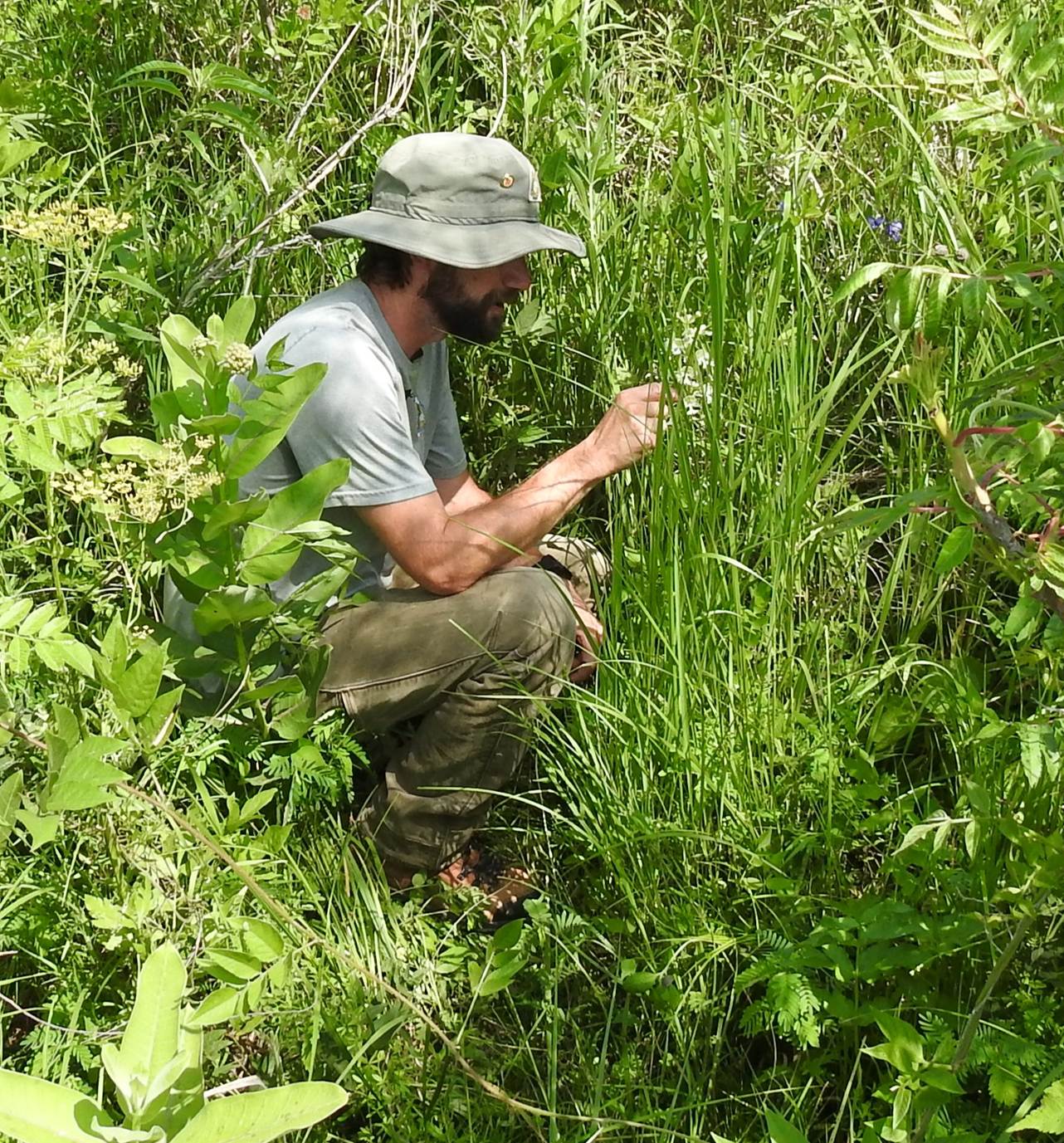
Steve Buback
State Botanist
Missouri Department of Conservation
Saint Joseph, MO
Where did you study and what was your major field of study?
Lewis & Clark College in Portland, Oregon and a Masters of Ecosystem Science and Management from Duke University in North Carolina.
Briefly describe your current job.
As a botanist for MDC, I hope to work on the ecology and conservation of rare plants and communities. Working with managers, partners, and the public to ensure that we conserve not only the most sensitive of these plants, but also to maintain the astounding diversity of plants in the state and the natural communities they form. These ancient communities face an array of stressors and documenting the changes occurring can help us conserve Missouri’s natural heritage into the future.
How do you use your native plant and/or prairie knowledge in your career today?
Plants are the biotic foundation of our natural communities. Knowing the plants within an area and ideally how they are doing provides knowledge on the other biotic and abiotic processes occurring. I use plant knowledge to tell me where I am, provide guidance to others, and ask and answer questions of every sort.
What is the most satisfying aspect of your current work?
I really enjoy finding a species of plant that is thought to be eliminated from the state, new to the state, or is just extremely rare. You can feel connections to generations of past botanists when observing something that hasn’t been documented in the state in decades. Knowing those plants have a place to survive because of the management that has occurred is extremely gratifying.
What native plant/prairie classes or trainings were especially important to your career?
The most important plant knowledge I have gained over the years hasn’t come from classes or trainings, but from field time with gracious botanists, managers, and enthusiasts. You can read about a species in a book or hear about it in a lecture, but seeing the species in place as part of community provides a level of understanding that is nearly impossible to replicate.
What other subjects have you studied that have been important to your career?
I’ve taken some very gratifying side quests into the world of entomology. The relationships between plants and insects is often highly involved, and it trying to understand one without the other is nearly impossible. All the flora and fauna are tied together in ways that we struggle to parse out, but the relationship between insects and plants are a good place to start trying!
Please describe volunteer or field work that was formative to your education and career.
Travelling widely and working in different states and ecosystems provides a lot of perspective. Seeing the same species in different habitats and behaving differently across its range provides ideas of what might be possible. Taking prescribed fire training in North Carolina opened me up to what a primary driver of ecosystems fire can be, and got me starting on trying to fathom the thousands of years of processes that have shaped what we see today.
What materials and technology are must-haves for your field?
Sturdy boots, the Flora of Missouri, and a hand lens. GPS can be handy as well occasionally.
What advice would you give students or others wanting to go into your field?
The unknown far outweighs the known everywhere. We can struggle to put names on the things around us, and if we cant even name them, how can we hope to understand the roles they play? Maintaining a sense of wonder and curiosity might be the most important trait for success in this field.